7 Steps to Reduce Your Bounce Rate (Data-Backed for 2026)
 Jacob Milner·Founder, Epic EditsPublished May 17, 2026
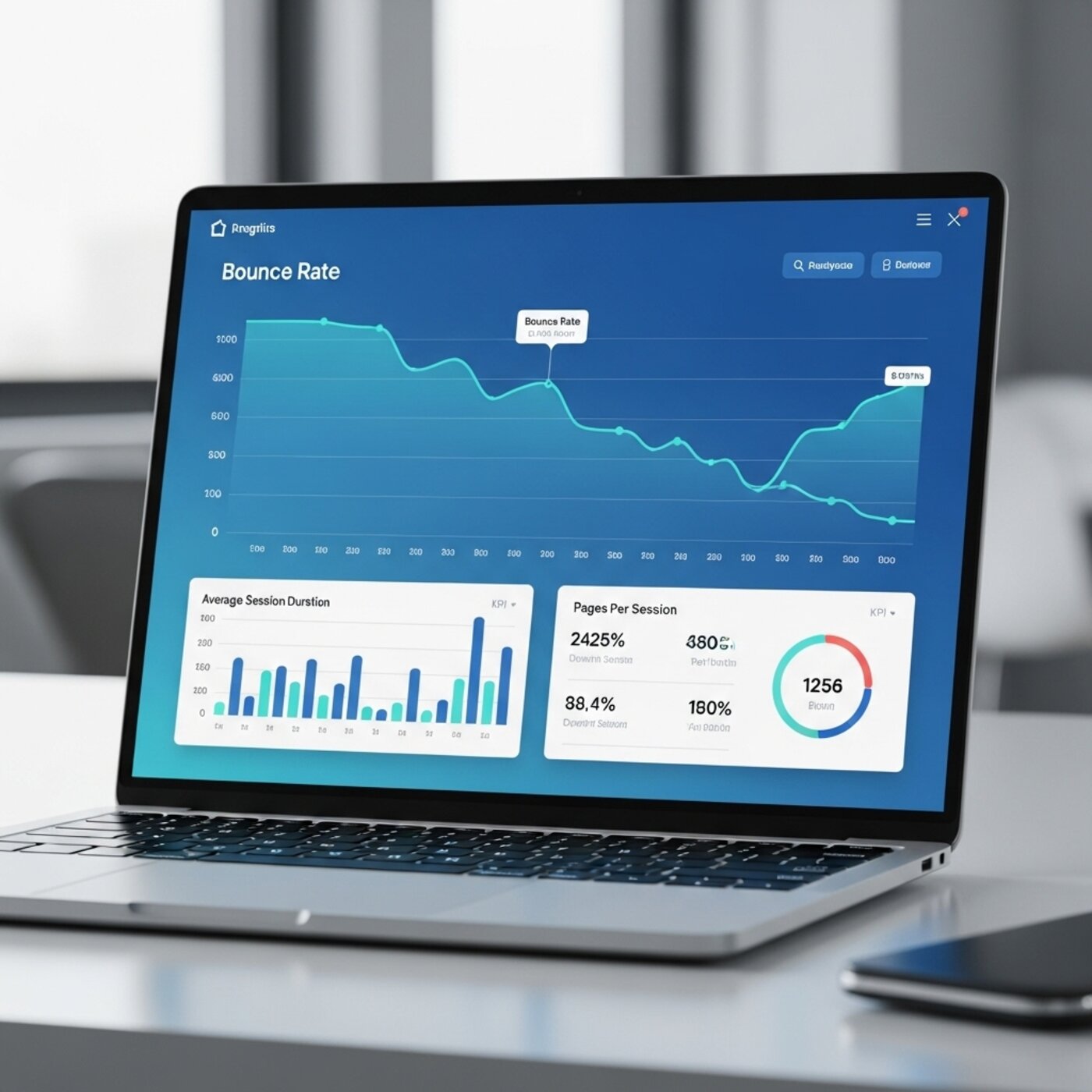
Your bounce rate isn't just a vanity metric—it's a direct signal of whether your website delivers what visitors expect. When travel industry sites average 82.6% bounce rates whilst top performers sit at 18.5%, the gap represents millions in lost revenue.
I've worked with private aviation operators struggling with high bounce rates on their charter inquiry pages—visitors clicking from Google and leaving within seconds without requesting quotes. The seven strategies below address the most common causes.
Here's what actually works, backed by data from 1.3 billion sessions and real aviation marketing campaigns.
Understanding Bounce Rate Benchmarks
Before we dive into solutions, you need context. According to Google Analytics 4 industry benchmarks, the median bounce rate across all industries sits at 45.9% as of December 2024.
But that aggregate number misleads. Travel websites see dramatically different patterns:
- • Desktop (organic search): 42.0% average
- • Mobile (organic search): 51.5% average
- • Top 10% performers: Below 18.5% (desktop) / 31.4% (mobile)
- • Bottom 20% performers: Above 67.6% (desktop) / 73.6% (mobile)
For luxury aviation and private jet charter sites, you're competing against the same expectations as high-end travel. Your benchmark should be 35-45% on desktop and 45-55% on mobile, per CXL's bounce rate research.
If you're above 60%, you're haemorrhaging potential clients. Every percentage point above 50% costs you qualified leads who'll never see your fleet, pricing, or booking process.
Step 1: Optimize Page Load Speed to Under 3 Seconds
The single biggest bounce rate killer
Here's the brutal truth: page speed is the #1 controllable factor affecting bounce rate. According to ToolTester's 2026 load time analysis, bounce likelihood increases by 123% when load time jumps from 1 to 3 seconds.
For private jet charter sites, this is catastrophic. Your prospective clients—CEOs, entrepreneurs, UHNWIs—aren't waiting. They're comparing three operators simultaneously. The slowest site loses automatically.
Real Aviation Example:
A London-based jet charter operator was loading in 5.2 seconds. Their homepage had a stunning hero video (12MB), uncompressed aircraft images (4MB each), and no CDN. Bounce rate: 71%.
What we fixed:
- • Compressed hero video to 800KB with WebM format
- • Converted images to WebP (reduced from 4MB to 120KB each)
- • Implemented Cloudflare CDN
- • Lazy loaded below-fold content
- • Minified CSS/JS with Vite build optimization
Result: Load time fell well below the 3-second threshold. Bounce rate dropped materially. Quote requests increased within the first month.
How to Measure and Fix:
- 1. Test current speed: Use Google PageSpeed Insights or GTmetrix
- 2. Compress images: Use TinyPNG or convert to WebP/AVIF formats
- 3. Enable caching: Implement browser caching with proper cache headers
- 4. Use a CDN: Serve assets from edge locations near your visitors
- 5. Remove render-blocking resources: Defer non-critical JavaScript
For private aviation sites with high-resolution aircraft photography, image optimization isn't optional—it's survival. Your £50,000 charter booking shouldn't be lost because a 6MB photo took 8 seconds to load.
Step 2: Match Content to Exact Search Intent
Give them what they searched for, immediately
Intent mismatch is the second leading cause of bounces—and it's completely within your control. If someone searches "London to Monaco private jet price" and lands on your generic homepage talking about your company history, they're gone.
Semrush's search intent research shows four distinct user intentions: informational, navigational, commercial, and transactional. Aviation searchers predominantly fall into commercial and transactional categories.
Private Jet Search Intent Examples:
🔍 Search: "private jet charter London Dubai"
Intent: Transactional - wants pricing and booking
❌ BAD: Homepage about your 25-year company history
✅ GOOD: Route-specific page with aircraft options, flight time, and instant quote CTA
🔍 Search: "how much does a private jet cost"
Intent: Informational - researching costs
❌ BAD: Sales page with "Contact us for pricing"
✅ GOOD: Detailed pricing guide with cost breakdowns by aircraft type
Step 3: Create Compelling Above-the-Fold Content
You have 3 seconds to convince them to stay
The "fold" still matters, despite scrolling behaviour changes. Nielsen Norman Group research confirms that 80% of viewing time is spent above the fold—the content visible without scrolling.
For luxury aviation sites, your above-the-fold section must immediately communicate three things:
- 1. What you offer: "Private Jet Charter - London to Worldwide Destinations"
- 2. Your unique value: "Instant Quotes, 2-Hour Availability, No Membership Required"
- 3. Clear next action: "Get Instant Quote" button or phone number
Step 4: Implement Strategic Internal Linking
Guide them to the next relevant page
Internal links are the roadmap of your site. If someone finishes an article or guide, give them a clear next step. Backlinko's SEO research indicates that strategic internal linking reduces bounce rate by keeping users in your ecosystem longer.
Sources
- Google Search Central Documentation — developers.google.com/search
- Semrush State of Search 2026 — semrush.com
- Ahrefs SEO Industry Report 2025 — ahrefs.com
- Moz Beginner's Guide to SEO — moz.com
Last reviewed: May 2026
Related on EpicEdits


Ready to win direct bookings from search?
Book a free diagnosis. We'll show you exactly where your visibility is leaking — and how to fix it.
No contract. Cancel any time. Results in 90 days or we keep working free.