Ultimate Private Jet Marketing Budget Guide May 2026
 Jacob Milner·Founder, EpicEditsPublished May 17, 2026
Stop guessing at marketing spend. This comprehensive guide shows exactly how much charter operators should invest in SEO, PPC, content marketing, and social media, with ROI-based allocation strategies proven to generate bookings.
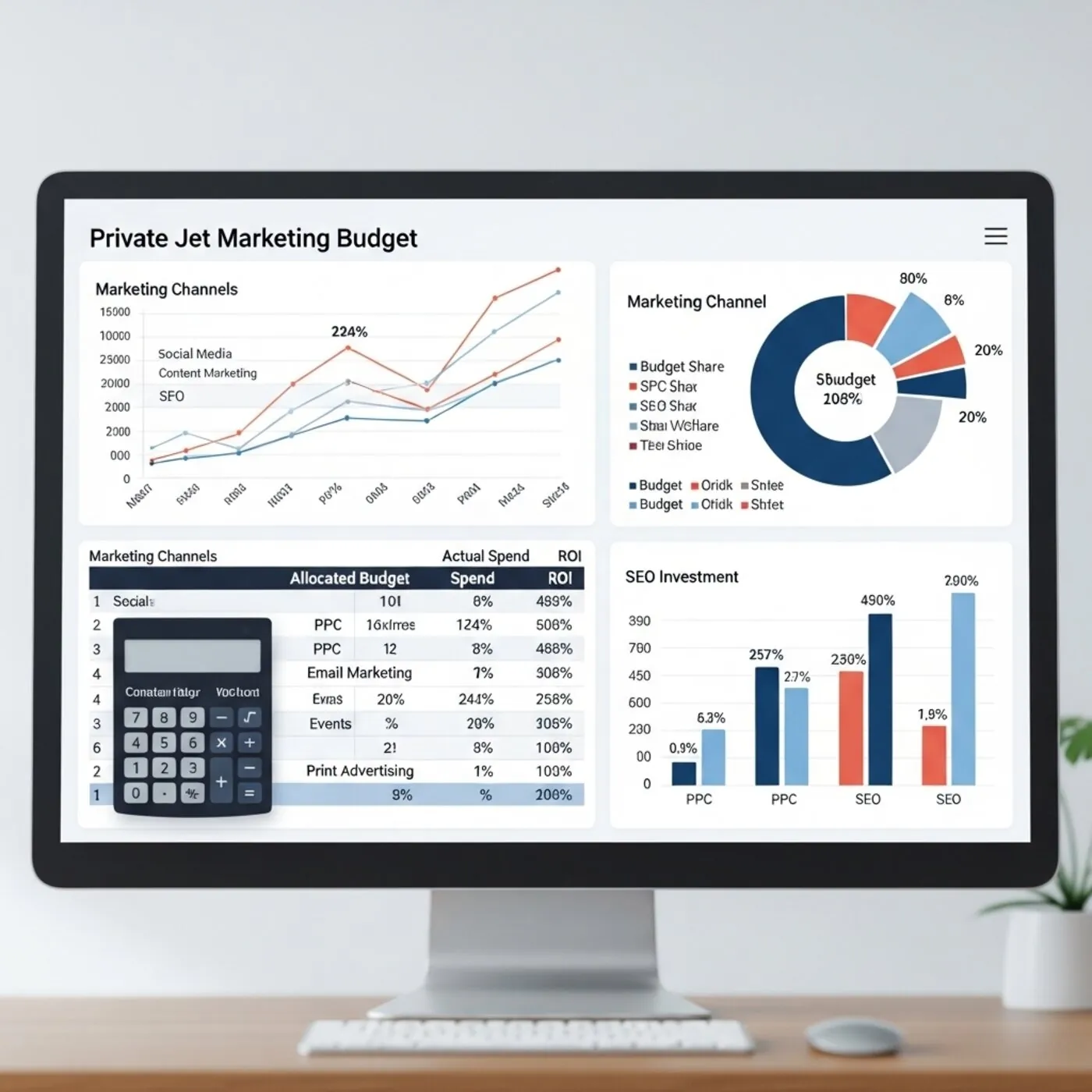
Private jet charter operators should allocate 6-12% of annual revenue to marketing, with budget distribution: 35-40% SEO and content marketing (highest ROI, long-term), 25-30% PPC advertising (immediate visibility, qualified leads), 15-20% social media and brand building, 10-15% website and technology, 5-10% PR and partnerships. Startup operators require £60,000-£120,000 annually for competitive market entry. Established operators typically invest £150,000-£350,000 annually, tracking bookings from each channel using CRM attribution and conversion analytics.
Most charter operators either overspend on ineffective channels or underfund marketing entirely, both strategies limit growth. This guide covers how to allocate a marketing budget across channels for maximum booking generation.
This guide eliminates guesswork with data-driven budget recommendations, channel-by-channel allocation strategies, ROI benchmarks, and practical implementation timelines. Whether you're launching a new charter operation or optimising an established marketing program, these frameworks ensure every marketing pound generates measurable returns.
How Much Should Charter Operators Spend on Marketing?
The industry standard is 6-12% of annual revenue allocated to marketing, varying based on business maturity, market competitiveness, and growth objectives. Underfunding marketing guarantees competitor dominance. Overspending without measurement wastes resources.
Startup Operators
Year 1-2of projected revenue
Higher investment building brand awareness and market presence from zero
Growth Phase
Year 3-5of annual revenue
Aggressive expansion capturing market share from competitors
Established Operators
Year 5+of annual revenue
Maintenance marketing with steady lead flow and brand recognition
Real-World Budget Examples
Small Charter Operator (£2M annual revenue)
Marketing Budget: £160,000/year (8%)
£13,300/month • Focus: Local SEO, targeted PPC, referral program
Mid-Size Operator (£8M annual revenue)
Marketing Budget: £640,000/year (8%)
£53,300/month • Focus: National SEO, PPC campaigns, content marketing, brand building
Large Operator (£25M annual revenue)
Marketing Budget: £1.75M/year (7%)
£145,800/month • Focus: International SEO, comprehensive PPC, PR campaigns, partnerships
Channel-by-Channel Budget Allocation
Once you've determined overall budget, allocate across channels based on ROI potential and business objectives. This proven distribution maximises booking generation while building long-term brand equity.
Recommended Channel Allocation (Established Operators)
Highest long-term ROI, compounds over time
Immediate visibility, qualified high-intent leads
Brand awareness, UHNW engagement, lifestyle content
Site optimisation, CRM, analytics, tools
Media coverage, strategic partnerships, events
Why SEO Gets The Largest Allocation
SEO and content marketing deliver strong long-term returns for charter operators. Unlike paid advertising, which stops the moment you stop paying, SEO compounds over time. Operators investing 35-40% in SEO capture organic visibility that generates bookings for years. Learn more about our private jet SEO services or, for the citation-first strategy behind them, the Citation Gap Method. Operators investing in AI search visibility alongside organic rankings can explore our AI search SEO service. Choosing between agencies? Our private jet SEO buyer's guide covers pricing, red flags, and what to expect. To understand the trip economics your buyers are researching, try our private jet cost calculator.
SEO & Content Marketing Budget Breakdown (35-40%)
For an operator with £200,000 annual marketing budget, this means £70,000-£80,000 allocated to SEO and content marketing. Here's exactly where these funds should go:
SEO Budget Allocation (£75,000 Annual Example)
-
£30k
Content Creation: Blog posts (2-4/month), pillar pages, fleet descriptions, location pages, SEO copywriting
-
£18k
Link Building: Digital PR, HARO outreach, aviation directory submissions, guest posting, partnership links
-
£12k
Technical SEO: Site optimisation, speed improvements, schema markup, Core Web Vitals, mobile optimisation
-
£10k
Local SEO: Google Business Profile optimisation, location pages, citation building, review management
-
£5k
Tools & Analytics: SEO software, rank tracking, analytics platforms, reporting tools
SEO and content marketing take 6-12 months to compound. The long-term nature of this channel means early investment pays dividends well beyond the initial spend period.
PPC Advertising Budget Breakdown (25-30%)
PPC delivers immediate visibility and high-intent leads. For £200,000 annual marketing budget, allocate £50,000-£60,000 to paid advertising:
PPC Budget Allocation (£55,000 Annual Example)
-
£35k
Google Search Ads: High-intent keywords ("private jet charter London"), route-specific campaigns, brand protection
-
£8k
Display & Remarketing: Retargeting website visitors, UHNW audience targeting, awareness campaigns
-
£6k
Social Media Ads: Instagram/Facebook targeting UHNW demographics, LinkedIn executive targeting
-
£4k
Bing Ads: Lower competition, often cheaper CPCs, captures 15-20% search market share
-
£2k
Management & Tools: Campaign optimisation, A/B testing, conversion tracking, bid management software
PPC delivers immediate visibility but stops the moment you stop spending. It works best as a complement to SEO, not a substitute for it.
SEO vs PPC for private jet leads
Both channels win leads. They work differently. Private jet SEO builds organic visibility that compounds month after month. Once a page ranks, it generates enquiries without ongoing spend. The downside: results take months to appear. You are investing in a long-term asset.
Google PPC services deliver immediate visibility at the top of search results. You pay per click, so costs scale with volume. It stops working the moment you stop paying. Most operators run both together: PPC fills the pipeline while SEO compounds in the background.