Web Design
Private Jet Website Design Cost May 2026: What You'll Pay + What You Actually Get
 Jacob Milner·Founder, EpicEditsPublished May 17, 2026
Most private jet operators spend £8,000–£60,000 on a new website. Some spend more. A few spend less. What you get at each price point varies enormously, and the wrong choice costs you enquiries every month.
The short answer on price
Private jet website design falls into three bands in May 2026. Each band reflects the scope of work, not just the design quality.
| Band | Price range | Timeline | What you get |
|---|---|---|---|
| Starter | £8,000–£20,000 | 4–6 weeks | Template-based build, basic fleet listing, one contact form, minimal SEO setup |
| Premium | £25,000–£60,000 | 8–16 weeks | Custom design, 10–30 route pages, fleet entity schema, quote UX, CMS, Core Web Vitals optimised |
| Enterprise | £60,000–£150,000+ | 16–30+ weeks | Bespoke build, 30+ route pages, multilingual, aggregator integration, CRM connection, compliance schema |
Most charter operators in the UK fall into the Premium band. They need custom design, proper route architecture, and a quote flow that works on mobile. The Starter band rarely produces bookings. The Enterprise band is for large fleet operators or those targeting multiple international markets.
What actually drives the cost
Design time is a small part of the budget. The real cost drivers are the complexity of the build and the aviation-specific requirements that generic web agencies often do not understand.
1. Route page architecture
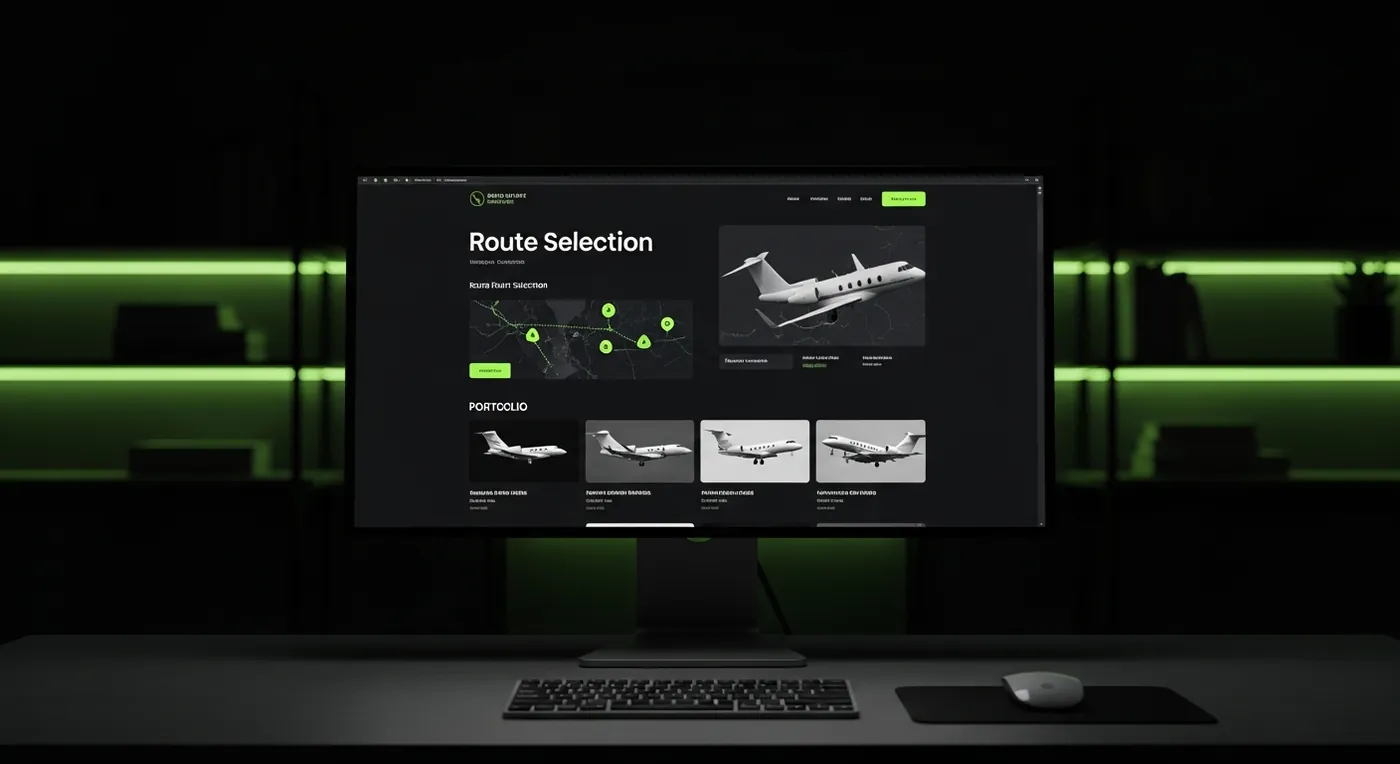
UHNW clients search for specific routes. "Private jet London to Nice." "Charter flight to Ibiza from Farnborough." They do not search for "private jet charter." They search for their route. Dedicated landing pages for each route add £500–£1,500 per page to a project.
2. Fleet entity schema
Google and AI systems (ChatGPT, Perplexity) need structured data (JSON-LD) to understand your fleet. Without it, your fleet is invisible to AI-powered search, so understanding how AI engines rank operators is now essential. This is foundational to modern private jet SEO services. Interactive tools also earn links and enquiries: our private jet cost calculator is an example of the kind of feature a modern charter site can offer.
3. Quote and booking UX
A multi-step quote flow can double conversion rates. Custom flows cost £3,000–£12,000 to design and build, integrating conditional logic and aircraft selectors.
AI Visibility Diagnostic
Is your current site costing you charter enquiries?
We run the AI Visibility Diagnostic on private jet websites. You'll see exactly which pages are underperforming and what a rebuild should prioritise.
What ongoing support costs
A website is not finished on launch day. SEO needs ongoing attention. Budget for monthly support on top of your build cost.
| Service | Monthly cost | What it covers |
|---|---|---|
| Basic support | £500–£1,500 | Hosting, security updates, minor content changes |
| SEO + content | £2,500–£5,000 | Monthly blog content, route page updates, link building, ranking reports |
| Full programme | £5,000–£8,000 | Everything above plus AI visibility, technical SEO, and CRO improvements |
Red flags in cheaper quotes
Template build with no route pages
Generic aviation templates rank for nothing. Route pages drive bookings.
No fleet entity schema in scope
Without schema, AI systems cannot read your aircraft. You are invisible to ChatGPT.
Generic contact form only
A route-agnostic contact form converts at a fraction of a proper quote flow.
No portfolio of aviation clients
Private aviation has unique UX and SEO requirements.
What a good brief looks like
- Number of aircraft in your fleet
- Number of primary routes you want pages for
- Languages required
- Current booking process details
- CRM or availability integration requirements
- Regulatory accreditations to display
The SEO Factor
A new website is also a ranking opportunity. A well-built site that targets the right route keywords, carries the right schema, and loads fast will start generating organic enquiries within 3–6 months.
Design without technical SEO is expensive wallpaper.
FAQs About Web Design Cost
Private jet website design typically costs £8,000–£20,000 at starter level, £25,000–£60,000 for a premium custom build with route pages and booking UX, and £60,000–£150,000+ for enterprise builds with multilingual support and CRM integration.
The biggest cost drivers are route page architecture (individual landing pages for each route), fleet entity schema markup, custom quote or booking flows, CMS flexibility, multilingual capability, regulatory badge display (ARGUS, Wyvern, AOC), and page speed optimisation.
A starter template-based build takes 4–6 weeks. A premium custom build with route architecture takes 8–16 weeks. An enterprise build with CRM integration and multilingual capability typically takes 16–30 weeks.
Red flags include template builds with no route pages, heavy image sliders that slow page load, no fleet entity schema, a generic contact form instead of a route-specific quote flow, no CMS access, and an agency portfolio with no aviation clients.
Sources
- NBAA Business Aviation Fact Book 2025, nbaa.org
- WINGX Global Business Aviation Report 2026, wingx-advance.com
- EpicEdits Aviation SEO Research 2026, epicedits.co.uk
- Google Trends: Private Jet Charter 2020–2026, trends.google.com
Last reviewed: May 2026
Related on EpicEdits