Web Design
10 Private Jet Website Mistakes That Kill Quote Requests May 2026
 Jacob Milner·Founder, EpicEditsPublished May 17, 2026
Most private jet websites look credible. Few of them produce enquiries at the rate they should. The gap is usually not design. It is structure, content, and trust signals.
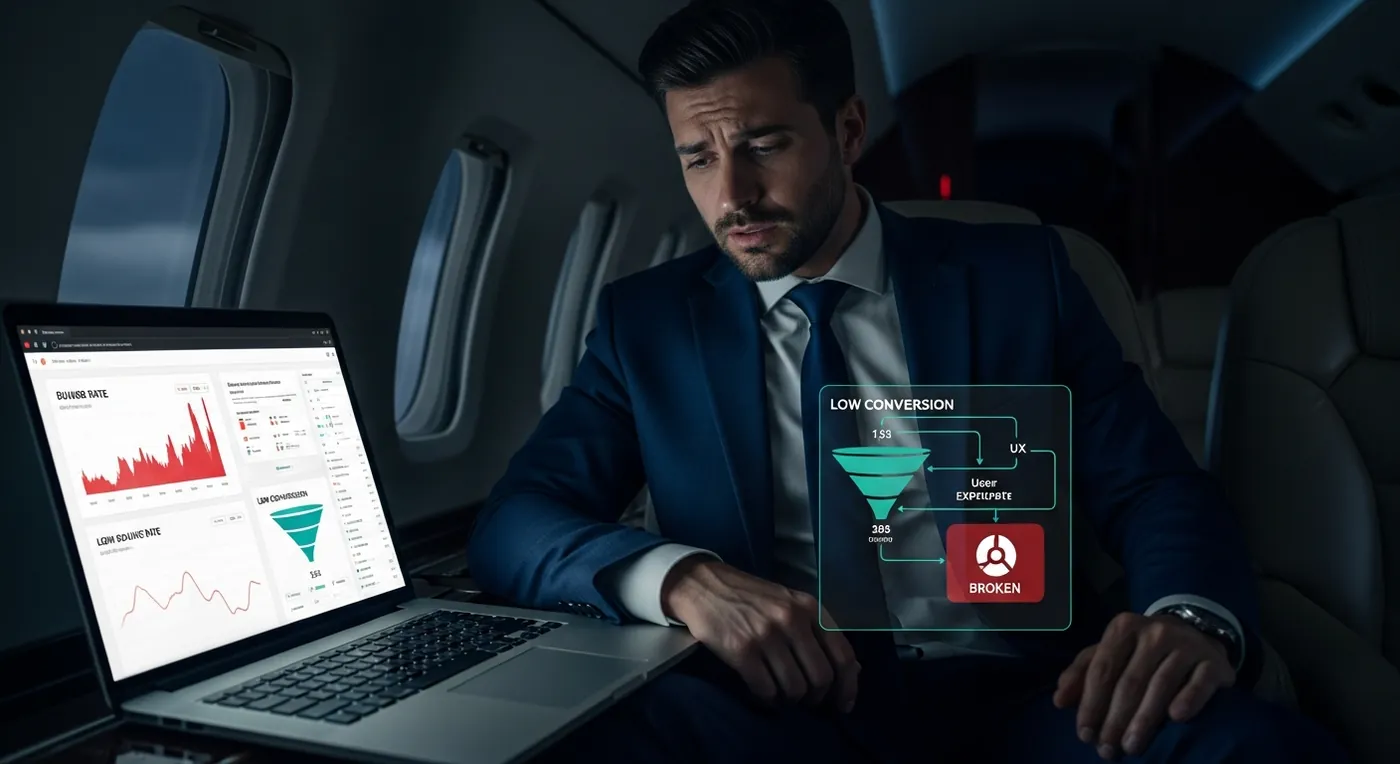
A 73% bounce rate is not a traffic problem. It is a site problem. UHNW visitors land on private jet websites every day and leave without making contact. Not because they changed their mind. It is because the site did not give them what they came for.
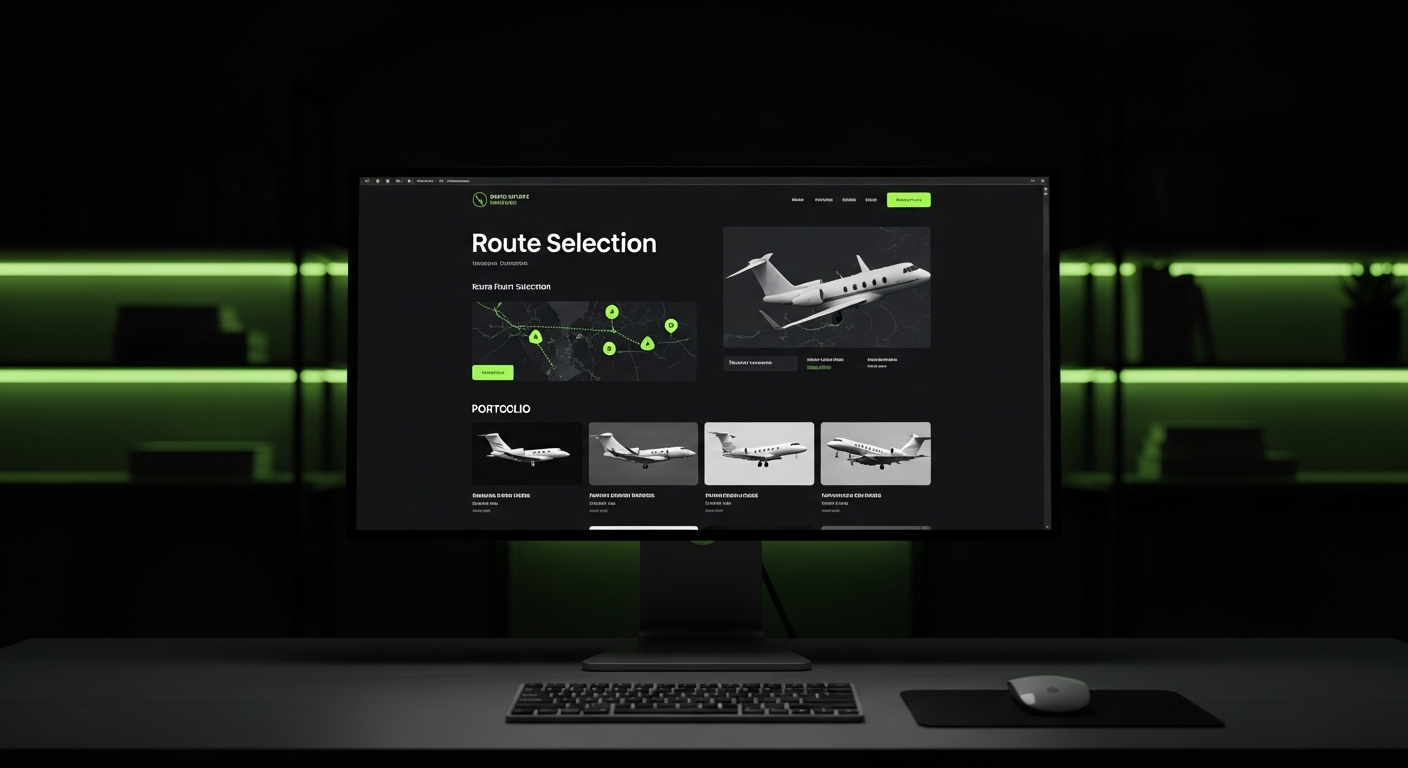
No route pages, just a routes overview
Most private jet websites have a single 'our routes' page with a list of destinations. That page ranks for nothing. UHNW clients search for specific routes: 'private jet London to Ibiza'.
The fix
Build a dedicated landing page for each priority route. Include flight time, aircraft options, approximate pricing range, and a route-specific quote form. Route pages convert at a far higher rate than generic terms.
Nothing compelling above the fold
The hero section is where you win or lose the visitor in three seconds. Generic 'Fly in style' headlines tell the visitor nothing about where you fly or why they should call you.
The fix
State your offer precisely above the fold. Mention specific routes or regions. Show an actual aircraft from your fleet. Add a quote request CTA like 'Get a quote for your route'.
Trust signals buried or absent
UHNW clients do not assume you are safe. They check for ARGUS, Wyvern, or AOC numbers. If those signals are not visible on arrival, the visitor leaves.
The fix
Place your most important accreditation badge above the fold. Display your AOC number visibly. Named testimonials from real clients outperform anonymous reviews.
No fleet entity schema
Google and AI systems understand your aircraft through structured data. Without fleet entity schema, your aircraft do not exist to AI systems like ChatGPT or Perplexity.
The fix
Add JSON-LD schema for each aircraft. Include registration, model, range, and operating airports. This is foundational to AI SEO for private aviation.
A generic contact form instead of a quote flow
A contact form with generic fields provides no route or passenger information. Every submission requires a follow-up, and many clients give up before you reply.
The fix
Build a multi-step quote flow: 1. Airports, 2. Passengers/Date, 3. Aircraft Category, 4. Contact details. This captures everything needed to quote accurately on first contact.
Slow load speed
UHNW clients abandon slow sites. A LCP above 2.5 seconds loses visitors before the page is read. Video backgrounds and uncompressed galleries are common killers.
The fix
Run your site through PageSpeed Insights. Compress images to WebP, defer autoplay video, and use a CDN. High-performance engineering moves sites from poor to good UX.
Features Your Site Must Have
Fixing mistakes is only half the job. Some features win enquiries on their own. Add these and your site starts to sell for you.
-
Interactive fleet showcase
Your fleet is your product. Let clients explore specs, cabin layouts, and amenities before they enquire.
-
Instant quote calculator
Hidden pricing loses buyers. A route-based calculator gives a fast answer and keeps the visitor on the page.
-
Mobile-first design
Many clients start on a phone. Design for mobile first. Do not treat it as an afterthought.
-
CRM integration
Every quote request should flow straight into your aviation CRM. Manual data entry loses deals.
-
Comprehensive trust signals
Clients need trust before they share contact details. Show safety ratings, named testimonials, and team credentials.
SEO Failures That Also Cost Enquiries
A site can look expensive and still fail. Pretty design means nothing if buyers cannot find you. These failures repeat across charter websites.
-
Wrong keywords. Most operators chase broad terms like "luxury travel". Those terms attract dreamers, not buyers. Target specific aircraft and route terms instead.
-
Thin schema. Fleet schema is not enough on its own. Add LocalBusiness and Service schema too. Without it, Google has to guess what you do.
-
Broken internal links. Broken links waste crawl budget and frustrate visitors. Run a full crawl and fix every dead link.
-
Weak content. Thin or duplicate pages give AI systems nothing to cite, a common gap when operators overlook how AI engines rank charter operators. Write clear pages that answer real buyer questions.
Start with a technical audit. It finds broken links, missing schema, and speed problems in one pass. See our private jet SEO service for the full process.
AI Visibility Diagnostic
Find out which mistakes are costing you charter enquiries
Get the AI Visibility Diagnostic. We review your site, identify the specific errors hurting your conversion rate, and tell you what to prioritise.
FAQs About Website Conversion
The most common reasons are: no route-specific landing pages, no trust signals above the fold, a generic contact form instead of a route-specific quote flow, slow page load speed, and missing fleet entity schema that prevents AI systems from referencing your aircraft.
UHNW clients look for: ARGUS Platinum or Wyvern Wingman rating prominently displayed, Air Operator Certificate number, IS-BAO or IS-BAH accreditation, named testimonials from real clients, and specific aircraft registration numbers. These should appear above the fold on every key page.
The highest-impact changes are: create dedicated route pages, replace your generic contact form with a route-specific quote flow, add fleet entity schema so AI systems can identify your aircraft, display trust signals prominently, and fix page load speed if your Largest Contentful Paint is above 2.5 seconds.
Sources
- NBAA Business Aviation Fact Book 2025, nbaa.org
- WINGX Global Business Aviation Report 2026, wingx-advance.com
- EpicEdits Aviation SEO Research 2026, epicedits.co.uk
- Google Trends: Private Jet Charter 2020–2026, trends.google.com
Last reviewed: May 2026
Related on EpicEdits