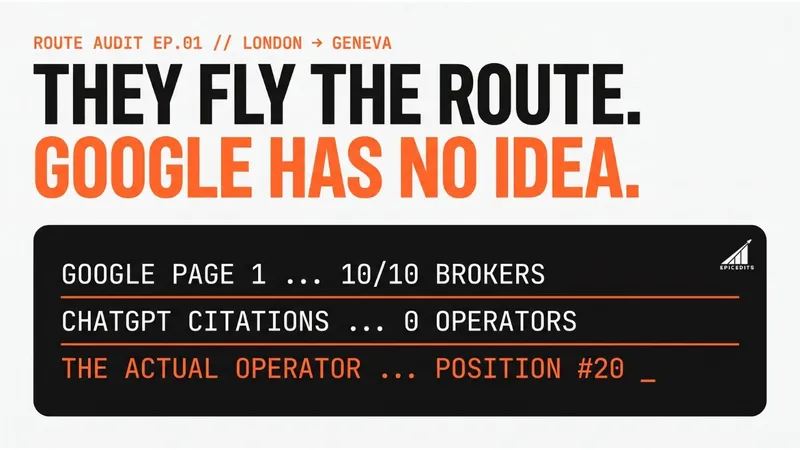
When AI answer engines need charter data, they cite whoever provides the cleanest feed. Aggregators excel at this, and keep the booking commission. This article teaches the "Sovereign Data" strategy: publishing your own CSV feeds and API endpoints so you become the authoritative source. Operators who want to compete on Google and AI platforms should explore dedicated private jet SEO strategies built for aviation.
The Data Supply Chain Problem
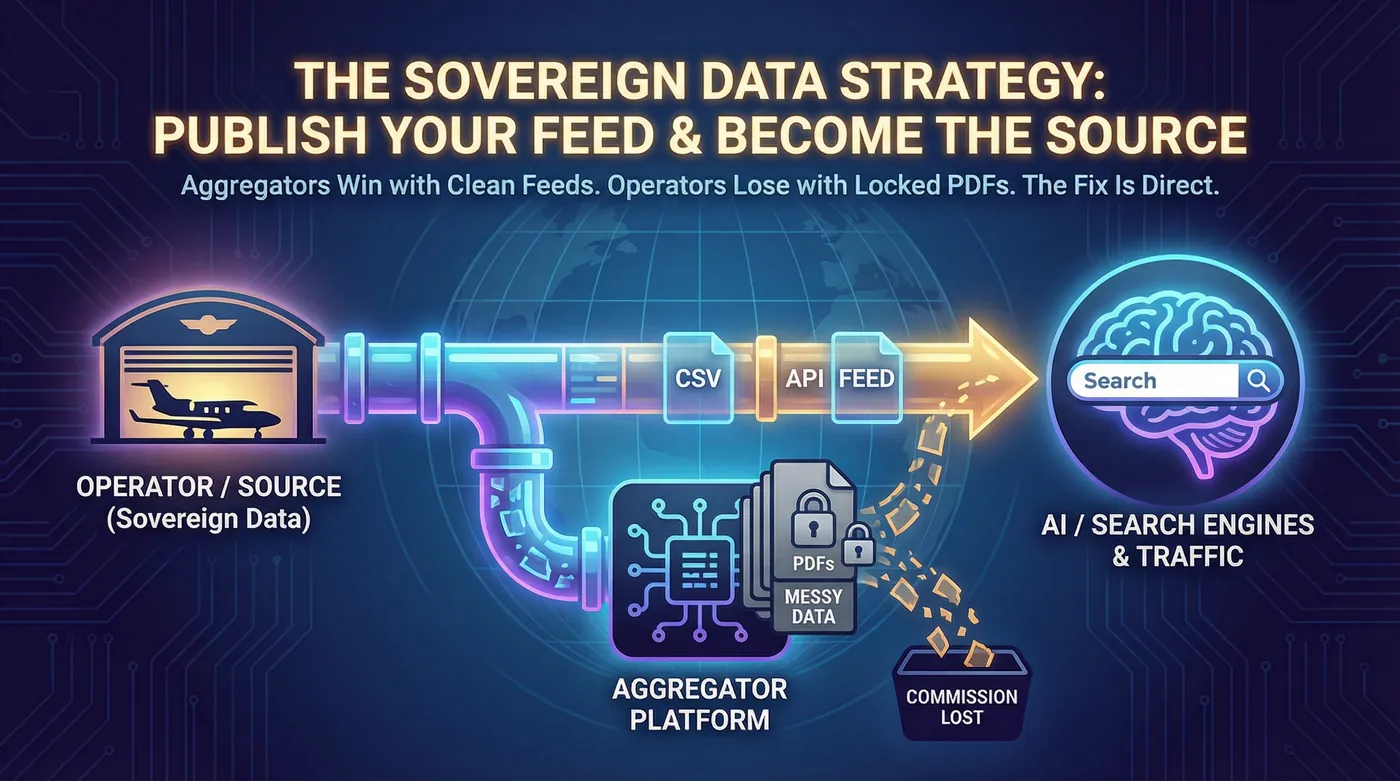
Here's why aggregators consistently beat operators in AI visibility: they speak the language machines understand. While you lock your schedules in PDFs, hide pricing behind contact forms, and bury availability in JavaScript calendars, aggregators publish clean, normalised CSV feeds that AI search engines like ChatGPT and Perplexity can ingest directly, a shift we cover in our work on AI search for charter operators.
The threat is clear: If you don't provide a feed, an aggregator will create one for you, using whatever public information they can scrape about your fleet. They become the "primary source" in AI citations.
The Aggregator Advantage
Aggregators normalise data from dozens of operators into consistent formats with stable URLs. AI systems trust these feeds because they're reliable and machine-readable. You can't beat aggregators at their own game, but you can change the game by becoming a primary source yourself.
The "Sovereign Data" Strategy
The fix is simpler than most operators realise: Publish your own "Public CSV Feed." It sounds technical, but it's just a stable URL with your schedule, fleet, or pricing data in a format machines can read. Combined with proper JSON-LD implementation, sovereign data feeds transform you into a citable primary source.
Human Docs
Landing page explaining data fields, units, update frequency, and contact.
Machine Readable
CSV or JSON endpoints with consistent column names and ISO 8601 timestamps.
Trust Layer
Versioning, changelogs, SLA commitments, and licensing terms.
Feed Templates: What to Include
Fleet Feed Columns
operatorid, operatorname, tailnumber, aircrafttype,
                    manufactureyear, serialnumber, maxpayloadkg, cabinconfig,
                    safetycerturl, lastupdated
The Outreach Framework
Prepare Proof
Collect safety certificates, insurance statements, and tail number registrations.
Package Assets
Create separate folders for aggregators (CSV) and data vendors (API docs).
Pitch Messaging
Lead with what you provide and include sandbox links for immediate testing.
Frequently Asked Questions
Aggregators provide clean, normalised CSV and API feeds that AI systems can easily ingest. Operators typically lock data in PDFs, behind contact forms, or in formats machines can't read. When you don't provide a feed, an aggregator will create one for you, and keep the commission when clients book through them instead of you.
Sovereign Data means publishing your own public CSV or API feed at a stable URL so you become the authoritative source. When aggregators or AI systems need charter data, they pull from your feed, crediting you as the primary source rather than an intermediary.
A Fleet Feed should include: operatorid, operatorname, tailnumber, aircrafttype, manufactureyear, serialnumber, maxpayloadkg, cabinconfig, safetycerturl, and lastupdated. A Schedule Feed adds: flightid, departureairport, arrivalairport, departureutc, arrivalutc, seatsavailable, and status.
Follow the 'Prepare, Package, Pitch' framework: 1) Prepare proof materials (certificates, sample data, company overview), 2) Package tailored assets (CSV samples, API docs, mapping documents), 3) Pitch with benefit-led emails that include sandbox links and clear onboarding paths.
For public availability data and aircraft specs, allow anonymous GET over HTTPS. For detailed pricing or reservation data, use API keys with scoped tokens. Never expose sensitive passenger information in public feeds. The goal is making the right data accessible while protecting what must remain private.
Sources
- Schema.org Open Standards, schema.org
- NBAA Business Aviation Fact Book 2025, nbaa.org
- EpicEdits Aviation SEO Research 2026, epicedits.co.uk
Last reviewed: May 2026